
In-Depth Meditation Training
With Ven. Losang Gendun
Meditation is essential for personal transformation and a crucial complement to Buddhist studies. This 4-year online course provides students with long term, in-depth support in their meditative development. This weekly course will offer authentic traditional instructions, in contemporary language, aimed at providing a comprehensive set of meditation tools for students to transform their knowledge of the Dharma into personal experience. As well as traditional and modern theories on supplementary topics such as models of healthy psychological and spiritual development, ritual, narrative, ethics, and social engagement, supported by an international community of meditators, online and live.
The first two courses are now available to watch and revisit any time. Contact the Buddha Project directly to inquire, at info@thebuddhaproject.org. The third course begins on Saturday September 6th, 2025 and is open to everyone who feels ready to explore the depths of the path.
Thubten Norbu Ling is joining with Land of Medicine Buddha (CA), Tse Chen Ling (CA), Vajrapani Institute (CA), and Ocean of Compassion Buddhist Center (CA), as well as Maitreya Institute (Amsterdam), Shantideva Center (New York), Jamyang Buddhist Centre (Leeds) and Institut Vajra Yogini in France for IDMT’s third year, The Radiant Ground: Emptiness and Buddha Nature.
Questions? Please email us at info@tnlsf.org
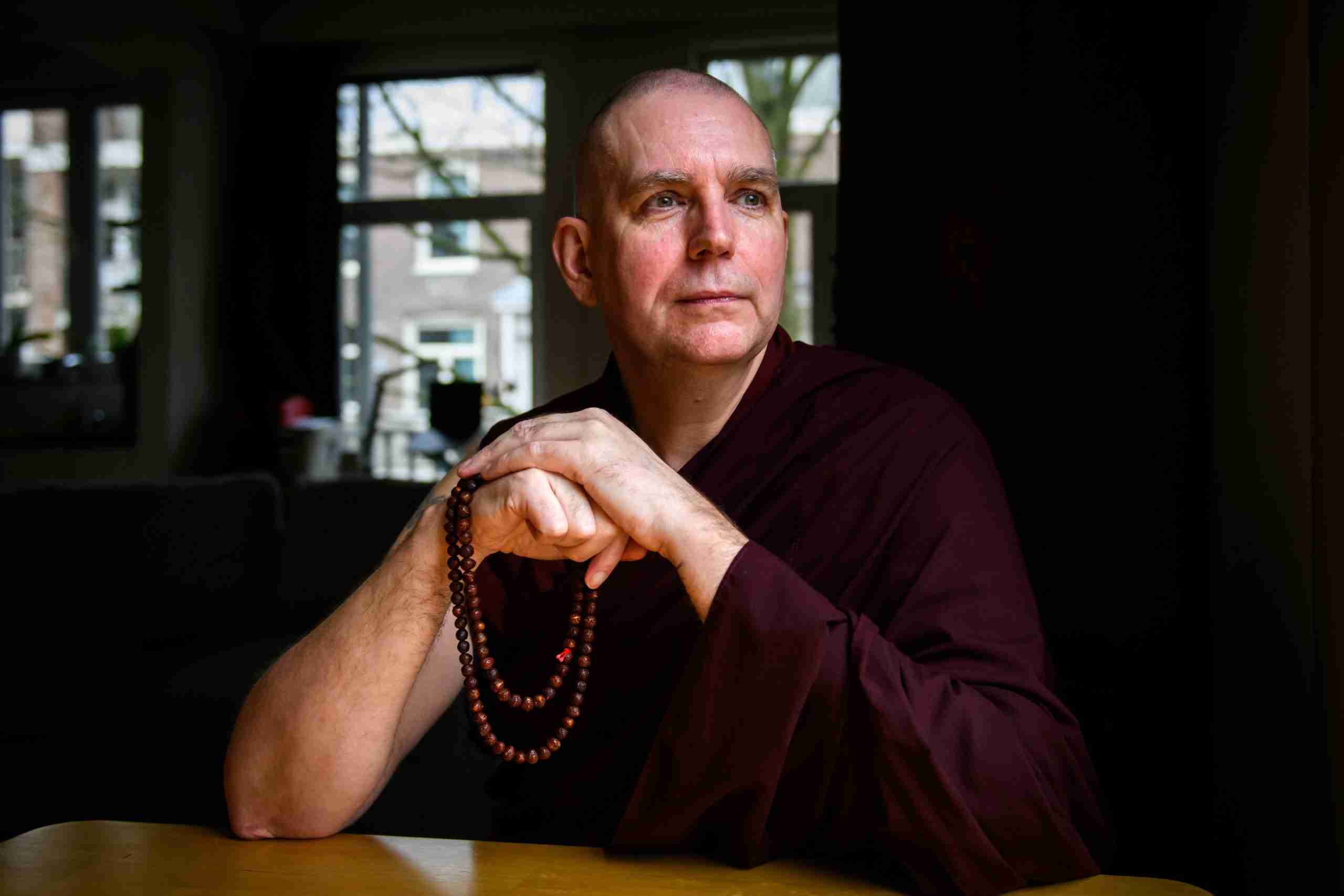
In-Depth Meditation Courses with Ven. Losang Gendun
Ven. Losang Gendun brings together deep philosophical training, meditative discipline, and a grounded, practical teaching style. Venerable Gendun has dedicated nearly four decades to practicing Buddhism and has served as a Bhikshu (Buddhist monk) in the Tibetan tradition for the past 18 years. He is known for his warmth, precision, and ability to guide students into the heart of the path with gentleness and depth. In addition, his teachings are especially supportive for those who seek clarity, stability, and joyful commitment in their practice. His extensive training includes ten years of studying Buddhist philosophy and practice in monasteries across France, India, Nepal, and Myanmar. Additionally, he spent over four years in retreat, immersing himself in Tibetan sutra and tantra, as well as the Burmese Theravada Forest Tradition. For the last 15 years, Ven. Gendun has been a dedicated teacher, sharing his knowledge of Buddhist philosophy, psychology, and meditation worldwide
The FPMT In-Depth Meditation Training (IDMT) is a four-year training offering meditators long-term support to help them progress in their meditative practice. It thereby provides the opportunity to experience a genuine taste of the nature of reality and bodhicitta.
IDMT was developed by Venerable Losang Gendun in dialogue with Lama Zopa Rinpoche, inspired by Rinpoche’s teaching that the true fulfilment of our precious human life is to generate the awakened mind, bodhicitta, and that a practitioner needs deep meditative practice to accomplish this. Based in the Lamrim and in the Gelug tenets, the training progresses from foundational shamatha and insight to mahamudra and kriya tantra. As a multi-center collaborative project this course is outside of our normal membership program, and a separate donation is needed.
The Radiant Ground: Emptiness and Buddha-Nature
Current Module: Enrollment Now Open
When: First Term, Saturdays, 7:30 to 10:00 am Mountain Time Sep. 6 – Nov. 29
(13 Classes)
Winter break: Nov 30 – Feb 6
Second Term, Saturdays, 7:30 – 10:00 am Mountain Time Feb. 7 -April 4
(9 classes)
Third Term (Year 3 Final Term) Saturdays, 7:30 to 10:00 am April 18 -July 4
(12 classes)
Class Format: One hour guided meditation followed by 90 minutes of teaching with Q&A
This year’s journey will weave together the profound view of Madhyamaka, as presented by Nāgārjuna and his successors, with the compassionate vision of Tathāgatagarbha, the Buddha-nature teachings that reveal our deepest potential for awakening. Far from abstract philosophy, these teachings offer a radical reorientation of how we perceive ourselves and the world—pointing us beyond habitual grasping to a space of clarity, openness, and profound compassion.
Having cultivated the foundational practices of shamatha and vipashyana in the first year and explored Yogācāra’s profound psychology of ignorance and awakening in the second, we now turn to the very heart of Tibetan Buddhism: the nature of emptiness and the luminous potential that resides within every living being.
Guiding us in this exploration will be core texts from India and Tibet. Nāgārjuna’s Mūlamadhyamakakārikā will serve as a central pillar, systematically dismantling the illusions of inherent existence. In dialogue with this, we’ll study Kamalashīla’s Stages of Meditation, a practical and accessible map for cultivating deep meditative insight grounded in the view of emptiness.
Balancing the radical freedom of Madhyamaka, we will encounter the warmth and encouragement of Maitreya’s Ratnagotravibhāga, a poetic illumination of the Buddha-nature within all beings. These teachings remind us that beyond confusion and conditioning, there is a basic goodness that has never been lost.
To ground these profound insights in daily life, we will also study the beloved text of Geshe Chekawa Yeshe Dorje, The Seven Points of Mind Training. With its pithy slogans and deeply practical tone, it offers tools for transforming adversity and cultivating bodhicitta on and off the cushion.
Throughout the year, our study and practice will be enriched by meditative teachings from both the Pāli and Sanskrit sūtra traditions, inviting a direct and experiential understanding of emptiness—not as a concept, but as a liberating shift in perception.
This year is an invitation to let the view of emptiness infuse your practice—not as abstract philosophy, but as living experience: clear, liberating, and rooted in compassion. Our aim is not to gather concepts, but to transform how we see and relate to the world. Through study, reflection, and meditation, we learn to meet life with less grasping, more openness—and a heart that naturally responds with wisdom and care, held by the strength of community.
Registrations received on a Saturday morning may not be processed on time. Please register 24 hours in advance.
Entering the School of the Yogins
Now Available On-Demand
In a world that often dismisses its significance, the mind remains mysteriously at the heart of what we call life. Founded by the brothers Vasubandhu and Asanga, the Buddhist Yogācāra school focuses on the mind as ‘forerunner of all things’, the creator of our experience, and the storyteller that narrates our existence. Yogācāra’s analysis of how the mind constructs our reality, can help us relieve the constraints of the ego, habitual patterns and reactive emotions, to experience greater ease, possibility, and freedom in every moment.
In the second year of the IDMT, we will emphasize the lived experience of meditation, both on and off the cushion. Guided by the Buddha’s third turning of the Wheel of Dharma, we will begin by training in the successive stages of shamatha, followed by a deeper journey into insight meditation. We will also explore how concepts can blind and alienate us by adding an imaginary layer to our interdependent world. Using spiritual developmental models such as the 37 Factors of Awakening and the 10 Perfections, we will learn how to live more freely in daily life. We will also explore the role of narratives, the philosophy of language, and how to cultivate great compassion for all living beings to help heal our conflicted world.
Foundation of Buddhist Insight
Now Available On-Demand
The course will roughly follow the Gelug presentation of the schools of tenets as a pedagogical basis for deepening insight into the nature of reality, with every layer of practice informing the next, culminating in the practices of Mahamudra and Kriya Tantra.
Students will train in both shamatha and vipassana, gradually investigating the nature of self and phenomena as being impermanent, selfless, empty of imaginary nature, empty of inherent existence, buddha nature, and the union of bliss and emptiness. They will explore how layers of ignorance are projected onto our perception – the side-effect of the unenlightened mind’s conceptual interaction with sensory perception – and how to challenge these superimpositions through reasoning and direct insight.
Some of the highlights from year one are:
- Insight meditation as the application of the seven enlightenment factors to the four close placements of mindfulness
- Application of Buddhist psychology (mind and mental factors) to meditation and daily life
- Training in both bare awareness and mindfulness with analysis and investigation
- Meditation on the twelve links of dependent origination
- Introduction to the seven stages of purification in Theravada
- Exploring the relation between our conditioned nature and potential to become enlightened
- Mindfulness of the qualities of the Buddha as a perspective on ourselves and our relation with the Buddha
- Setting up a motivation; harnessing the power of our intentionality; exploring the relation between right view, wholesome emotions, and our sense of agency
- Meditation on the four brahmavihara’s and the relations between them
- Generating the mind of definite emergence as a balanced awareness of our precious human life being in the nature of samsara
- The supportive role of the arhat ideal in meditation, as a precursor to the bodhisattva ideal
FAQ – In-Depth Meditation
Who is this program for?
IDMT is for students with a firm understanding of Mahayana Buddhism who want to deepen their meditative practice. If you’ve taken Discovering Buddhism or FPMT’s Basic Program—or similar training—you’ll be well prepared.
Can I join the newest class without prior participation?
Yes! Each course is designed to stand alone while building upon previous material. New students in the third class will receive recommendations for preparatory materials and recordings to help them integrate smoothly.
How much does it cost? Can I get a tax deduction?
This program operates on a dāna (generosity) basis. A suggested donation of €15 (or local equivalent) per session helps support our teachers and centers. No one is turned away for lack of funds. Donations are made directly to The Buddhist Center and are tax deductible as permitted by law.
What kind of meditation is taught?
You’ll receive instruction in both shamatha (calm abiding) and vipashyana (insight meditation), grounded in traditional Tibetan Buddhist methods and supported by contemplations on emptiness, compassion, and Buddha nature.
What are the sessions like?
Each week includes:
• 1 hour of guided meditation
• 1.5 hours of teachings and Q&A
Sessions take place on Zoom and are supported by an international community of sincere practitioners.
How can I access the prior years material?
The recordings for year one and two are available directly from The Buddha Project. Please email info@thebuddhaproject.org to request access